
Last checked September 2026 against 13 sources · Editorial policy
Menopause belly: why fat moves to your waist
A menopause belly is a shift of fat to the waist as estrogen falls. In a 4-year study, only women who became postmenopausal had a significant increase in visceral fat. A waist over 35 inches raises the risk of heart disease and type 2 diabetes. Exercise reduces waist size and visceral fat in postmenopausal women, and HRT reduced abdominal fat by 6.8% in a meta-analysis. Bloating can also swell the belly.
Falling estrogen shifts fat to the waist, and visceral fat rises after menopause. Belly fat vs bloating, the 35-inch waist risk line, and the exercise that shrinks it.
Menopause belly: expectation vs reality
What people often expect
“Menopause belly fat is inevitable, and crunches or a detox will flatten it”
What the evidence shows
Fat does shift to the waist as hormones change, but you can reduce it: exercise trials in postmenopausal women found less visceral fat and smaller waists. No exercise burns fat from one spot, and no supplement is proven to target belly fat. Some weight-loss products even contain hidden drugs.
Free 7-day perimenopause meal plan
Seven days of meals with protein, fiber and calcium in every day, short recipes and a shopping list sorted by aisle. Pick how you eat and get the PDF now.
Free: week 1 of the strength plan (PDF)
Two full-body sessions, a walking target and four simple strength tests, with versions for no equipment and for dumbbells.
What causes menopause belly fat
Why belly fat builds at menopause
The British Dietetic Association says changing hormone levels at menopause increase the amount of fat stored around the waist. The NHS notes that weight gain in perimenopause and menopause often happens around the stomach and upper body. This is a change in body shape, even when your weight stays about the same.
Visceral belly fat and menopause
In a 4-year study of women who started out premenopausal, all gained fat under the skin with age, but only those who became postmenopausal had a significant increase in visceral fat. Their estradiol fell, and their fat burning dropped by 32%. The authors concluded that menopause itself was linked to more total and visceral fat.
Perimenopause belly
Belly changes can start before your last period. In the SWAN study, the rate of fat gain doubled at the start of the menopause transition while lean mass declined, and these changes continued until 2 years after the final period. Physical activity also tends to fall about 2 years before menopause.
Learn more →Why belly fat matters
Fat around the waist raises cholesterol, blood pressure and the risk of diabetes. The NHLBI says a waist circumference of more than 35 inches in women increases the risk of heart disease and type 2 diabetes. Measure just above your hipbones, right after you breathe out.
Learn more →Menopause belly bloat
A swollen belly isn't always fat. The NHS says bloating is most often caused by gas, from foods, fizzy drinks or swallowed air, or by constipation, food intolerance, celiac disease or IBS. Some people feel bloated around their period, which can happen more unpredictably in perimenopause.
Learn more →HRT and belly fat
A meta-analysis of 107 trials found HRT reduced abdominal fat by 6.8% and lowered insulin resistance in women without diabetes. HRT isn't a weight-loss treatment, and there's little evidence that most types cause weight gain. It may be worth discussing if you also have hot flashes or other symptoms.
Learn more →Menopause belly pictures: what changes
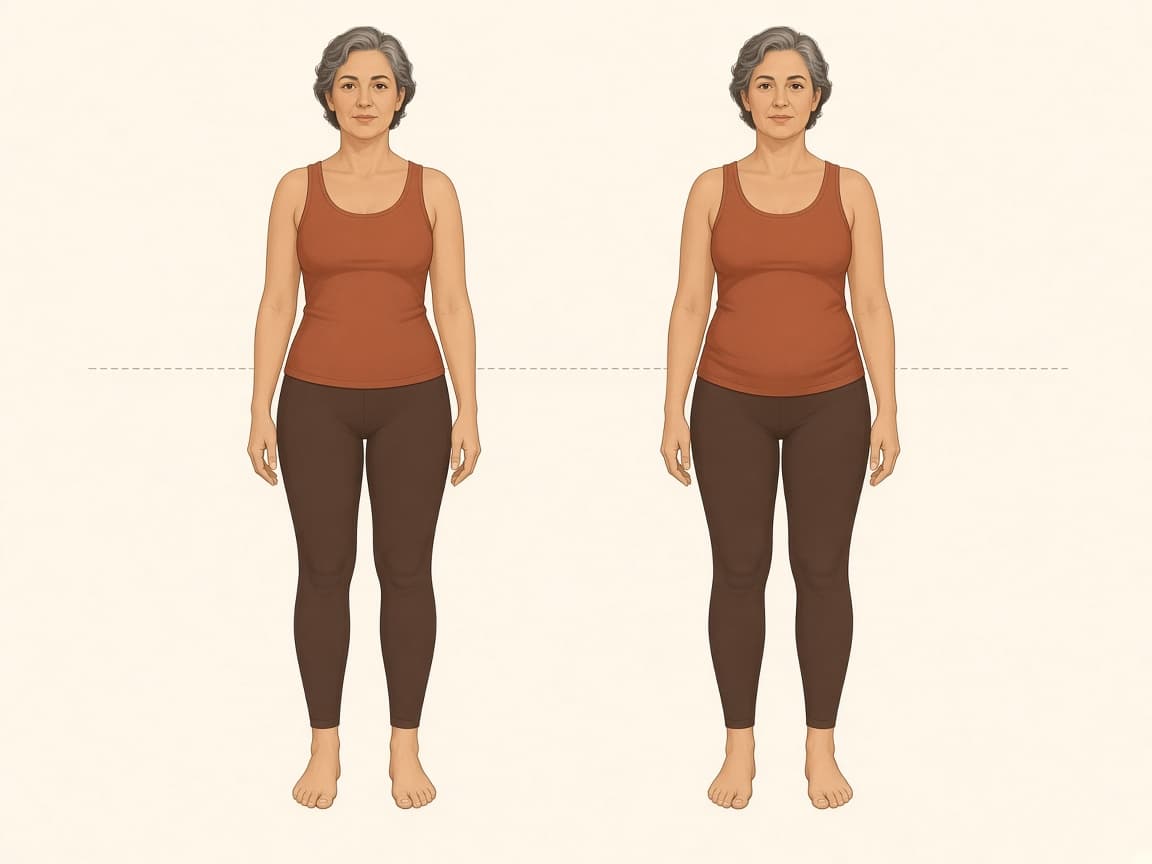
The same woman before and after menopause. Her weight has barely changed, but more fat now sits around her waist. This is a change in body shape.
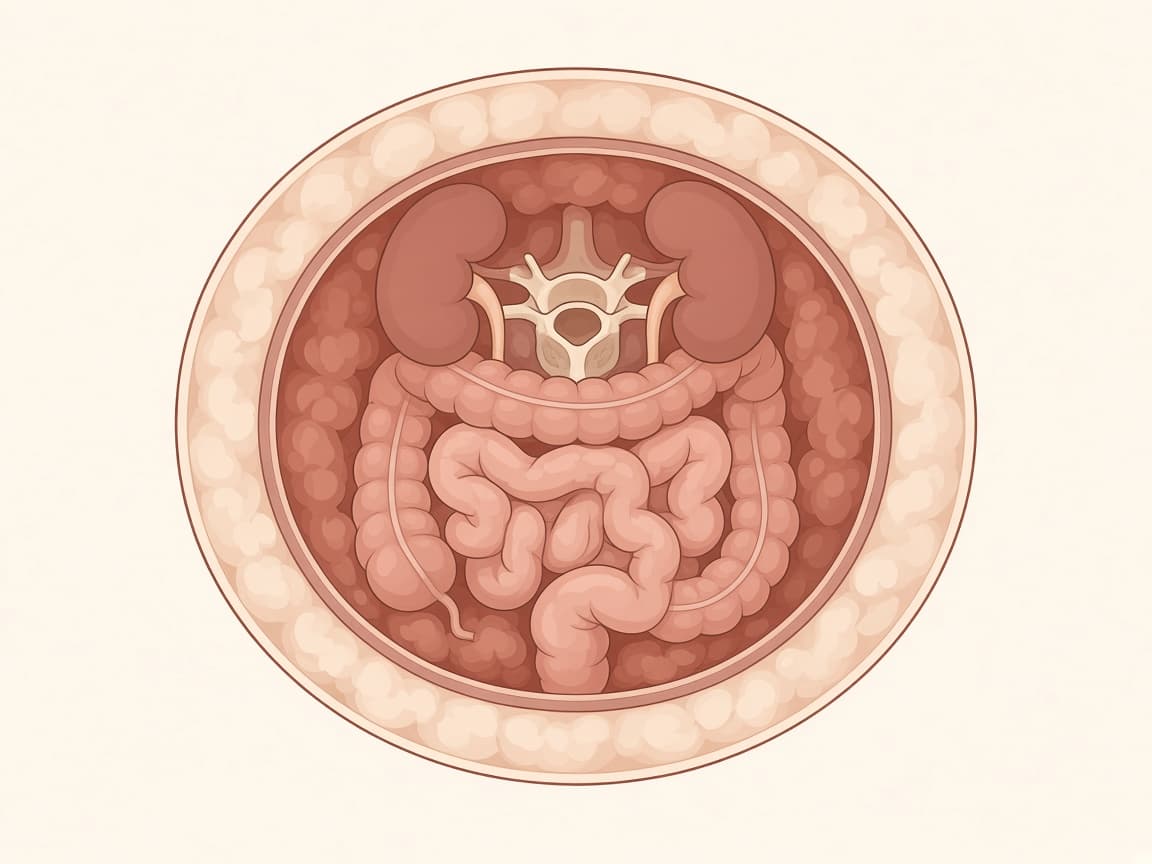
A cross-section of the abdomen. Subcutaneous fat (pale outer layer) sits under the skin; visceral fat (darker) packs around the organs. In a 4-year study, only women who became postmenopausal had a significant increase in visceral fat.
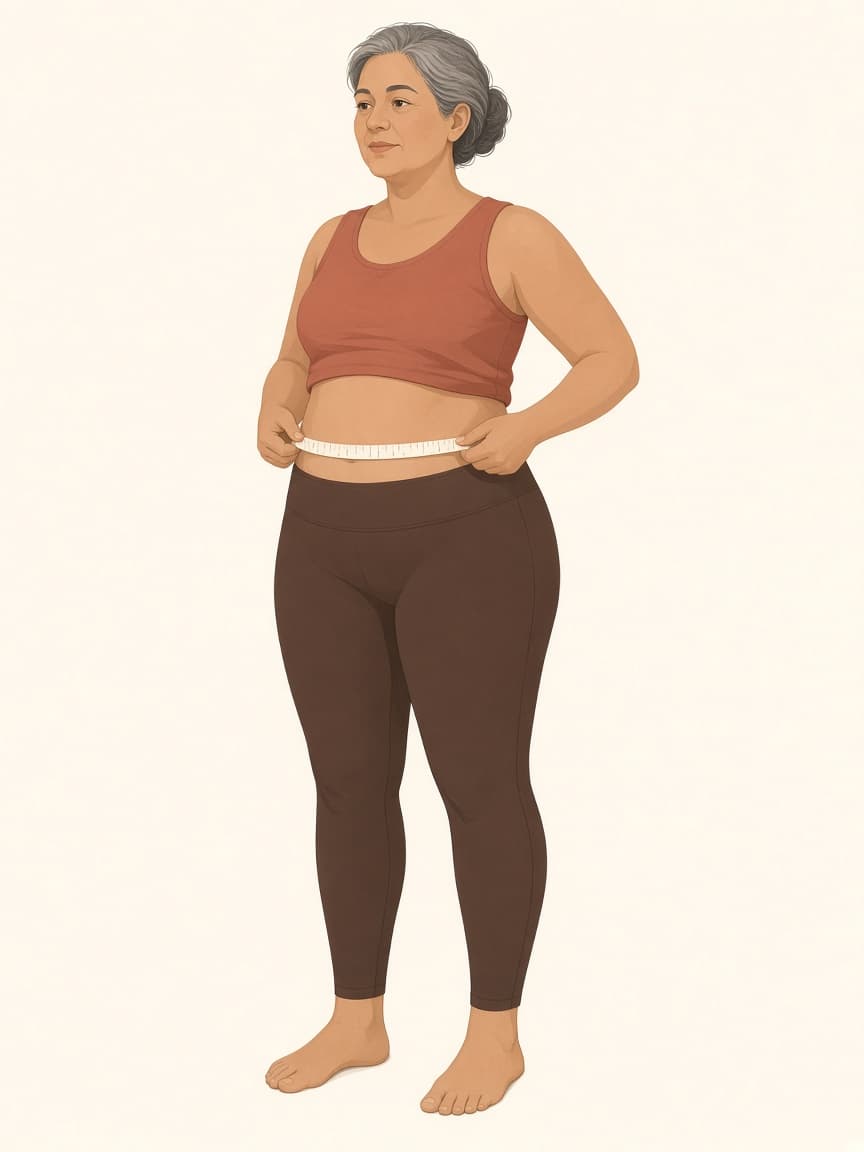
To measure your waist, place the tape just above your hipbones, right after you breathe out. A waist over 35 inches raises the risk of heart disease and type 2 diabetes.
Menopause belly fat by the numbers
From the studies on this page
less abdominal fat with HRT in a meta-analysis of trials
6.8%
after the last period, accelerated fat gain levels off
2 years
Bar scaled to a 12-year reference span
35 inches
5,697
Waist size is a better guide to belly-fat risk than weight alone.
How to lose menopause belly fat
Aerobic plus strength training for belly fat
Strong evidenceExercise lowered fat mass, waist circumference and visceral fat in postmenopausal women. Aerobic work did most for fat; resistance training for muscle.
Related guide →Healthy eating with exercise
Strong evidenceCombining a healthier diet with exercise works far better than either alone, the British Dietetic Association says.
Related guide →Muscle strengthening 2 or more days a week
Strong evidenceThe CDC recommends strengthening all major muscle groups, including the abdomen, at least twice a week alongside 150 minutes of moderate activity.
Ease bloating
Some evidenceEat smaller meals, drink water, exercise regularly, and cut back on fizzy drinks, alcohol and caffeine to reduce gas and bloating.
Related guide →HRT
If this is the causeReduced abdominal fat in trials; consider it for menopause symptoms, not for weight loss alone.
Related guide →Belly fat supplements and detox teas
No good evidenceNo supplement is proven to target belly fat, and the FDA warns many weight-loss products contain hidden ingredients.
Related guide →
When a menopause belly needs a doctor
A swollen belly that doesn't go away, with feeling full quickly
See a doctor; persistent bloating can occasionally be a sign of ovarian cancer.
Urgent: Bloating with vomiting, stomach pain or fever
Get an urgent appointment the same day.
Waist over 35 inches
Ask your doctor to check blood pressure, cholesterol and blood sugar.
Menopause belly: questions women ask
What causes menopause belly?
Falling estrogen shifts fat storage to the waist, visceral fat increases after menopause, and fat burning slows. Bloating can add to a swollen belly.
How do you get rid of menopause belly fat?
Combine aerobic and strength exercise with healthier eating. Exercise trials in postmenopausal women reduced visceral fat and waist size.
Does menopause belly go away?
Accelerated fat gain levels off about 2 years after the last period, but the fat doesn't disappear on its own. Exercise and diet can reduce it.
Why is my stomach bloated during perimenopause?
Bloating is usually gas, constipation or food intolerance. Some women also feel bloated around periods. See a doctor if it's frequent or persistent.
Does HRT reduce belly fat?
In a meta-analysis of trials, HRT reduced abdominal fat by 6.8%. It shouldn't be started just for weight loss.
Can you lose belly fat after 50?
Yes. Trials in postmenopausal women found exercise reduced visceral fat, fat mass and waist circumference.
What does a menopause belly look like?
Usually extra fat around the waist and upper body, sometimes without much weight change on the scale. Bloating can make it look bigger at times.
How do I measure menopause belly fat at home?
Measure your waist just above your hipbones, right after you breathe out. More than 35 inches raises a woman's risk of heart disease and type 2 diabetes.
Can bloating look like menopause belly fat?
Yes. Gas from food, fizzy drinks or swallowed air, constipation and food intolerance can make your belly feel full or bigger than usual.
Sources
- Lovejoy JC, Champagne CM, de Jonge L, et al. Increased visceral fat and decreased energy expenditure during the menopausal transition. Int J Obes (Lond). 2008;32(6):949-58.
- British Dietetic Association. Eating well for the perimenopause and menopause (food fact sheet).
- NHLBI, NIH. Aim for a Healthy Weight: Assessing your weight and health risk.
- Khalafi M, Habibi Maleki A, Sakhaei MH, et al. The effects of exercise training on body composition in postmenopausal women: a systematic review and meta-analysis. Front Endocrinol (Lausanne). 2023;14:1183765.
- Salpeter SR, Walsh JM, Ormiston TM, et al. Meta-analysis: effect of hormone-replacement therapy on components of the metabolic syndrome in postmenopausal women. Diabetes Obes Metab. 2006;8(5):538-54.
- NHS. Bloating.
- US Food and Drug Administration. Tainted weight loss products (weight loss product notifications).
- NHS. Symptoms of menopause and perimenopause.
- Greendale GA, Sternfeld B, Huang M, et al. Changes in body composition and weight during the menopause transition. JCI Insight. 2019;4(5):e124865.
- NHS. Side effects of hormone replacement therapy (HRT).
- CDC. Adult Activity: An Overview. Physical Activity Basics.
- Sánchez-Prieto M, Romero-Domínguez M, Orozco R, et al. Incretin-based therapies in peri- and postmenopausal women with obesity: an expert position statement from the Spanish Menopause Society. Maturitas. 2026;213:109101.
- NHS. Ovarian cancer: symptoms.
See our editorial policy.
Related guides
Menopause weight gain
Menopause speeds up fat gain and muscle loss, while weight rises mostly with age. Why it happens, and the diet…
Best exercise and workouts for perimenopause and menopause
Strength training plus cardio cut fat, protect bones and help sleep. How much to do, a sample perimenopause wo…
Perimenopause bloating
Hormone swings slow digestion and cause water retention, so bloating is common in perimenopause. Food and life…
Menopause diet
What to eat in menopause: Mediterranean and DASH eating for heart and bones, 1,200 mg of calcium, protein, soy…