Body & cyclesPerimenopause fatigue
Tiredness that sleep doesn't fix is one of the most common perimenopause symptoms. Hormonal causes, blood tests to rule out (ferritin, TSH,…
Perimenopause is not only a 50+ topic: 55.4% of women aged 30–35 reported moderate or severe symptoms (Cunningham AC et al., npj Women's Health, 2025, n = 4,432).
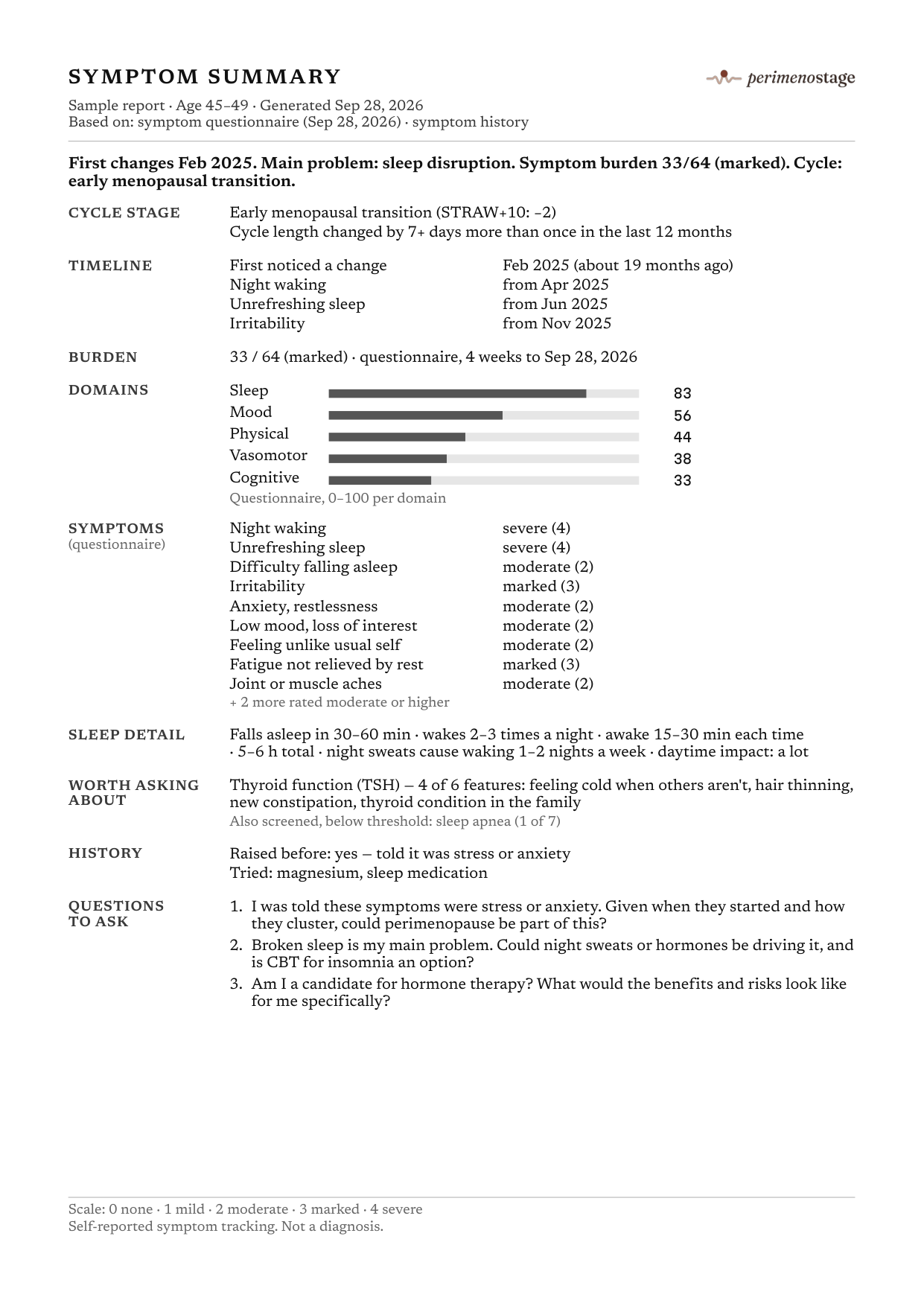
A quick check against clinical criteria, plus a one-page brief you can take to your doctor.
See whether your cycle patterns fit early transition, late transition, or earlier shifts.
of women 35+ reported fatigue in a Mayo Clinic and Flo survey of 17,494 women.
From 45, NICE identifies perimenopause from recently started hot flashes and cycle changes, without lab tests.
lasts 1 to 3 years on average.
without a period confirms menopause.
Search all 50 symptom guides — we show up to 6 here. The full list is on the symptoms page.
Tiredness that sleep doesn't fix is one of the most common perimenopause symptoms. Hormonal causes, blood tests to rule out (ferritin, TSH,…
Forgetting words and losing focus is common in perimenopause and usually improves after menopause. Why it happens, when to worry about…
Perimenopause is a common cause in women in their 40s, but medications, infections, thyroid problems and anxiety cause night sweats too.…
Aching, stiff joints are a common and overlooked menopause symptom. How estrogen affects joints, how to tell it from arthritis, and what…
Night sweats, falling progesterone and anxiety all disrupt sleep in menopause. CBT-I, HRT and other treatments that work, and how long…
Midlife hair thinning is often hormonal, but low iron and thyroid problems are common culprits. Tests to ask for, what HRT does for hair,…
Showing 6 of 50 symptom guides.
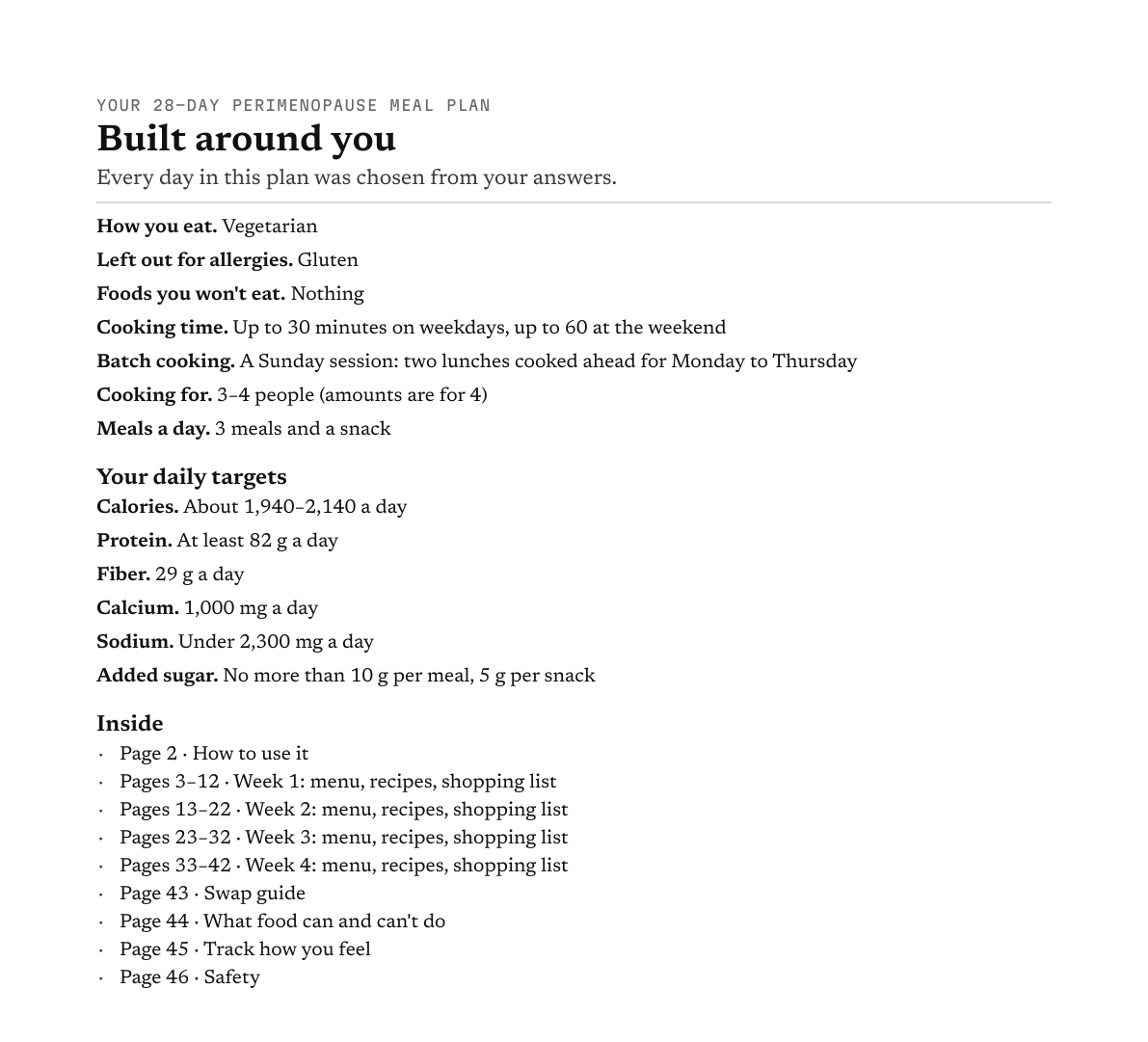
View all symptoms →Meal plan · $27 one-time
12 questions, then see day 1 free before you pay. 30-day money-back guarantee.
Not ready to buy? Get the free 7-day plan →
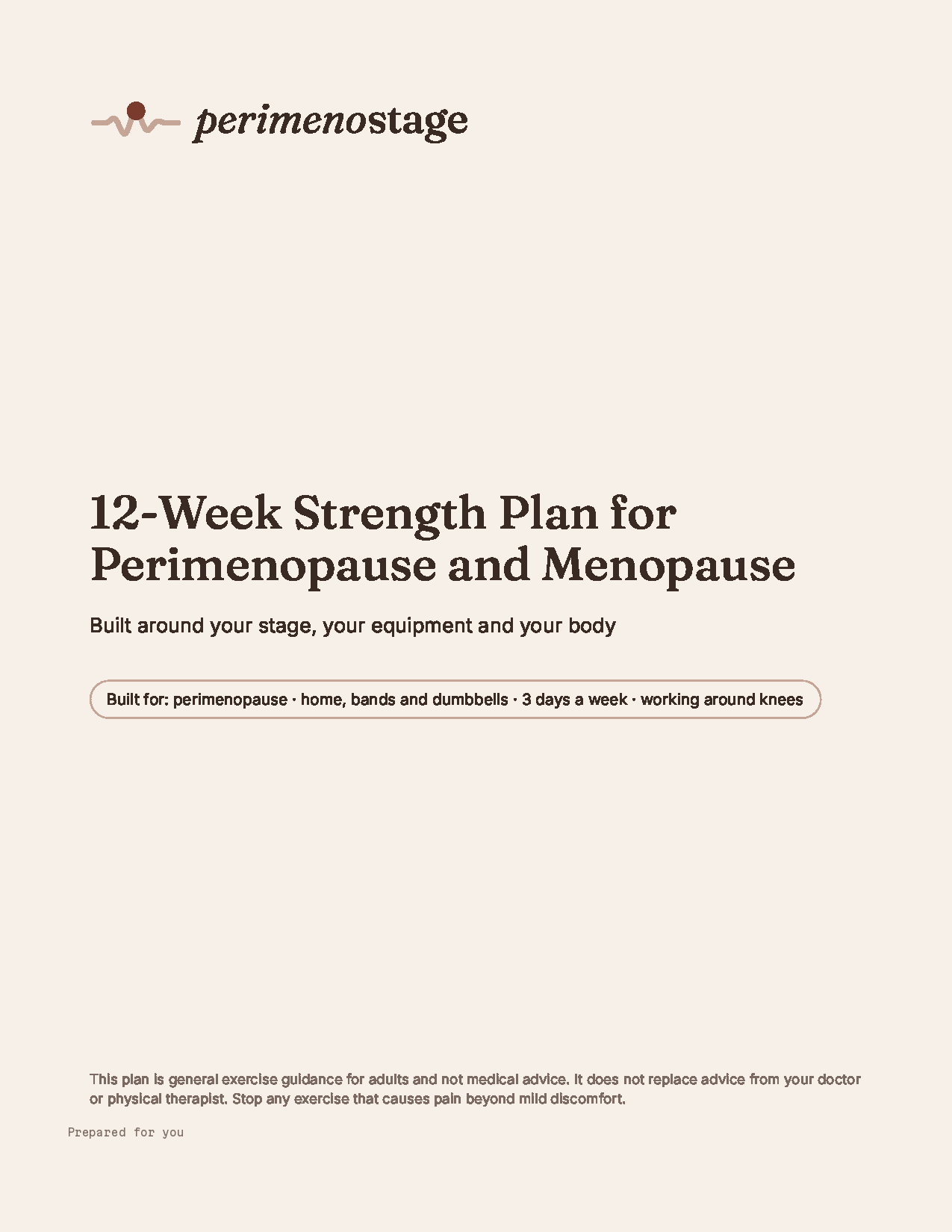
Strength plan · $27 one-time
Six questions, then see week 1 free before you pay. 30-day money-back guarantee.
Not ready to buy? Get week 1 free →
Perimenopause is identified mainly from symptoms and cycle changes. Below is what the published documents say about three frequent misconceptions.
Hormone levels move from cycle to cycle, so one result can fall in the normal range.
NICE NG23 (1.3.1) says to identify perimenopause in otherwise healthy people aged 45 or over from recently started vasomotor symptoms and any change in the menstrual cycle, without laboratory tests. It limits an FSH test to people aged 40 to 45 with symptoms and a cycle change, or under 40 when menopause is suspected (1.3.6). STRAW+10 describes FSH in the late transition as sometimes in the menopausal range and sometimes in the range of the earlier reproductive years.
What a home menopause test can and can't tell you →Symptoms that start while periods continue are easy to dismiss.
STRAW+10 places the start of perimenopause at the early menopausal transition (stage −2), when the length of consecutive cycles first differs by 7 days or more, and its end 12 months after the final period. NICE NG23 (1.3.1) identifies perimenopause from recently started vasomotor symptoms and any change in the menstrual cycle. Neither requires periods to have stopped.
Symptoms in the late 30s or early 40s are easily put down to stress.
In a US survey of 4,432 people aged 30 and older, 55.4% of those aged 30–35 fell into the moderate or severe category on the Menopause Rating Scale. That counts symptoms, not perimenopause. For people aged 40 to 45 with symptoms and a change in their cycle, NICE NG23 (1.3.6) allows an FSH test to help confirm menopause.
Doctors use an international framework (STRAW+10) to describe where you are in the years around the final period — based on your cycles, not a single blood test.
Stage criteria and guidance follow the 5 documents below. Last updated: November 2026.